Why Alberta companies are switching to digital safety management — and how JADR Safety Consulting helps
Across Alberta, safety programs are under increasing pressure to be more consistent, more traceable, and easier to audit. Many organizations are discovering that paper-based safety systems and disconnected spreadsheets no longer support the realities of modern field operations or regulatory expectations.
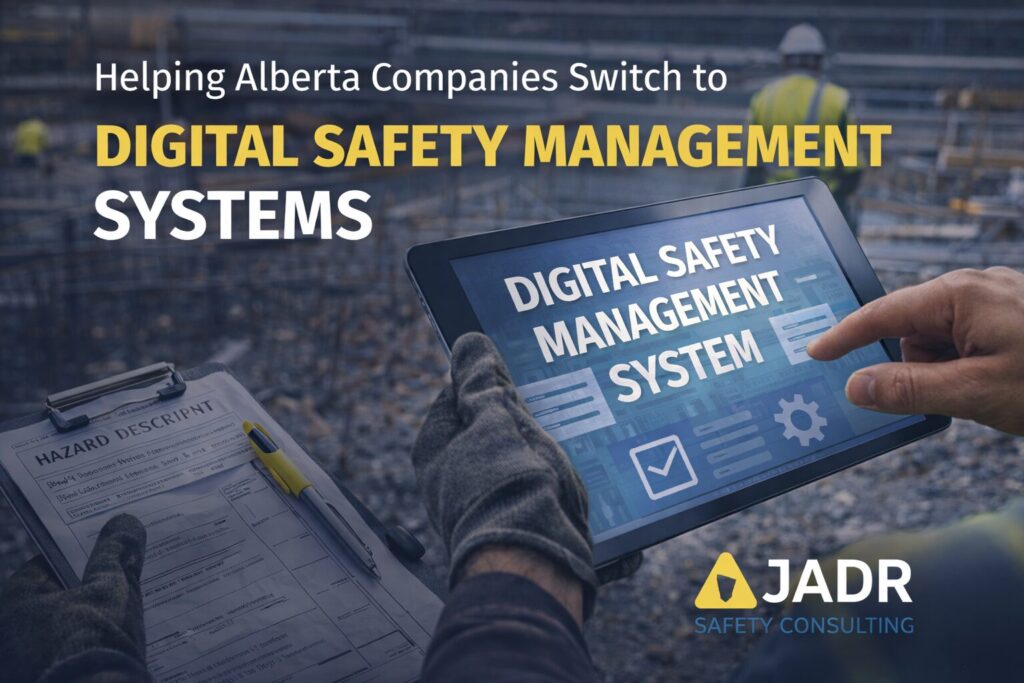
As a result, more Alberta companies are switching to digital safety management systems—not as a technology upgrade, but as a practical way to reduce administrative burden, improve compliance, and strengthen audit readiness.
At JADR Safety Consulting, we work directly with companies to make this transition practical, structured, and sustainable.
What Is a Digital Safety Management System?
A digital safety management system replaces paper forms and manual tracking with centralized, electronic workflows. These systems are commonly used to manage:
- Field Level Risk Assessments (FLRAs)
- Hazard assessments
- Training and certification records
- Incident reporting and investigations
- Inspections and corrective actions
- Contractor safety documentation
When implemented correctly, these systems allow safety processes to be completed in the field, tracked consistently, and retrieved quickly during audits, inspections, or incident investigations.
Why Paper Safety Systems Are No Longer Working
Paper-based systems can technically meet minimum requirements, but in practice they often create gaps that surface at the worst possible time—during audits, inspections, or after incidents.
Common challenges we see when reviewing client programs include:
- FLRAs completed after work starts
- Lost, illegible, or incomplete forms
- Inconsistent documentation between crews or sites
- Difficulty proving when assessments were completed
- Significant time spent chasing paperwork
These gaps become compliance risks under Alberta’s Occupational Health and Safety legislation, which requires employers to identify hazards and implement controls before work begins and whenever conditions change.
https://search-ohs-laws.alberta.ca/legislation/occupational-health-and-safety-code/part-2-hazard-assessment-elimination-and-control
Alberta OHS Expectations and the Role of Documentation
Alberta OHS places strong emphasis on hazard assessment, elimination, and control, as well as the employer’s ability to demonstrate that these processes are being followed consistently.
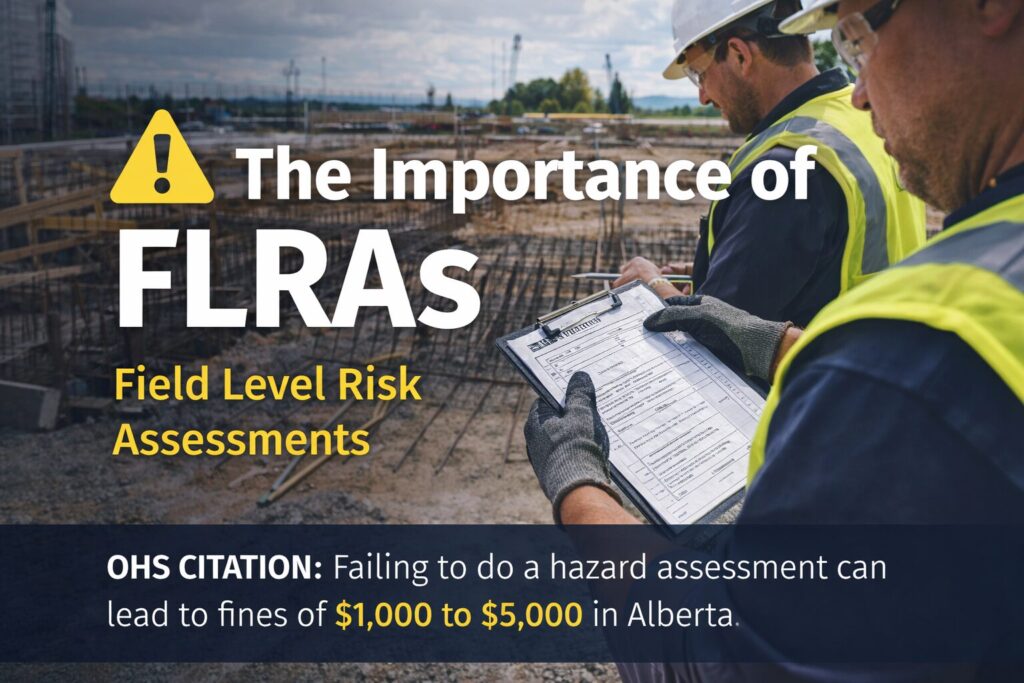
During inspections or investigations, documentation is often the first thing reviewed. The Government of Alberta publishes administrative penalties for safety non-compliance, including penalties related to missing or inadequate hazard assessments. Poor documentation is a recurring factor in enforcement actions.
https://www.alberta.ca/ohs-administrative-penalties
Digital systems do not replace the need for good safety practices—but they make it significantly easier to demonstrate that required processes are being followed.
Why Companies Are Moving to Digital Safety Systems
1. Consistency Across Crews and Sites
Digital workflows guide users through required steps, reducing variability in how FLRAs, inspections, and reports are completed.
2. Stronger Traceability
Digital records clearly show who completed an assessment, when it was done, and what hazards and controls were identified.
3. Reduced Administrative Load
Supervisors and safety staff spend less time managing paperwork and more time addressing actual risk.
4. Faster Audit and Inspection Response
Records that once took days to gather can often be produced in minutes.
5. Alignment With Industry Expectations
Organizations such as Energy Safety Canada emphasize proactive hazard management, worker participation, and effective safety systems—principles that are easier to support with digital tools.
https://www.energysafetycanada.com
In sectors such as geophysical and seismic operations, the Canadian Association of Geophysical Contractors (CAGC) also highlights the importance of structured hazard identification and field-level risk management in dynamic environments.
https://www.cagc.ca
Digital Systems and FLRAs: Where the Biggest Gains Are Made
Field Level Risk Assessments are one of the most common areas where safety programs struggle. We regularly see FLRAs that are rushed, inconsistent, or poorly documented.
Digital FLRA systems help by:
- Making assessments easier to complete in the field
- Prompting reassessment when conditions change
- Time-stamping and tracking completion
- Reducing after-the-fact paperwork
When FLRAs are simple to complete and easy to track, they are far more likely to be done properly and consistently.
How JADR Safety Consulting Helps Companies Make the Switch
Switching to a digital safety management system isn’t just about choosing software—it’s about making sure the system fits your operations, your regulatory requirements, and your workforce.
At JADR Safety Consulting, we support Alberta-based companies through the full transition process, including:
- Reviewing existing safety programs and documentation
- Identifying where paper systems are creating risk or inefficiency
- Helping select and configure digital platforms such as Workhub, doForms, and SiteDocs
- Aligning digital workflows with Alberta OHS and COR/SECOR requirements
- Training supervisors and field crews on practical, real-world use
- Ensuring systems are audit-ready, traceable, and sustainable
Our focus is on removing friction—not adding complexity—so safety processes support operations instead of slowing them down.
Conclusion
The shift to digital safety management systems is no longer just a trend—it’s a practical response to the realities of modern work and increasing compliance expectations in Alberta.
When implemented properly, digital systems improve consistency, reduce administrative burden, and provide the documentation regulators, auditors, and clients expect. With the right guidance, the transition can be straightforward and highly effective.
That’s where JADR Safety Consulting helps—bridging the gap between regulatory requirements, real-world operations, and practical digital solutions.
Book a consultation to review your current safety system and identify practical next steps.
Many Alberta companies are moving away from paper safety systems because they no longer support compliance, audits, or real field conditions. JADR Safety Consulting helps organizations transition to practical, digital safety management systems that are easier to use, easier to track, and aligned with Alberta OHS and COR/SECOR requirements.