Many small companies believe safety programs are only necessary once a business reaches a certain size. In reality, size does not reduce legal responsibility, operational risk, or exposure to enforcement. In Alberta, small companies face the same Occupational Health and Safety (OHS) obligations as larger organizations, often with fewer internal resources to manage them.
A well-designed safety program is not about bureaucracy—it’s about protecting workers, managing risk, and keeping the business operating without preventable disruptions.
Alberta OHS Requirements Apply to All Employers
Under Alberta’s Occupational Health and Safety Act and Code, every employer, regardless of size, is required to identify hazards, implement controls, and ensure workers are trained and informed. There is no exemption for small crews or owner-operator businesses.
Alberta OHS requires employers to:
- Assess hazards before work begins and when conditions change
- Implement controls to eliminate or reduce risk
- Ensure workers are competent to perform their tasks safely
- Maintain documentation that demonstrates these processes
For small companies, failing to meet these requirements can be especially damaging because enforcement action, work stoppages, or incidents can have an outsized impact on operations.
Small Companies Often Face Higher Risk
Smaller organizations typically operate with:
- Fewer supervisors
- Limited administrative support
- Tight margins and schedules
- Workers performing multiple roles
Without a clear safety program, responsibilities can become informal and inconsistent. This increases the likelihood that hazards are missed, training is undocumented, or procedures are applied differently from one job to the next.
Ironically, small companies often rely more heavily on individuals “knowing what to do”, which works until something goes wrong—and then there is little documentation to support decisions made in the field.
Safety Programs Protect the Business, Not Just Workers
A safety program isn’t just a compliance document—it’s a risk management tool.
For small businesses, a safety program helps:
- Reduce the likelihood of incidents and injuries
- Demonstrate due diligence during inspections or investigations
- Support insurance claims and coverage
- Meet client and contractor prequalification requirements
- Protect the business owner from personal liability
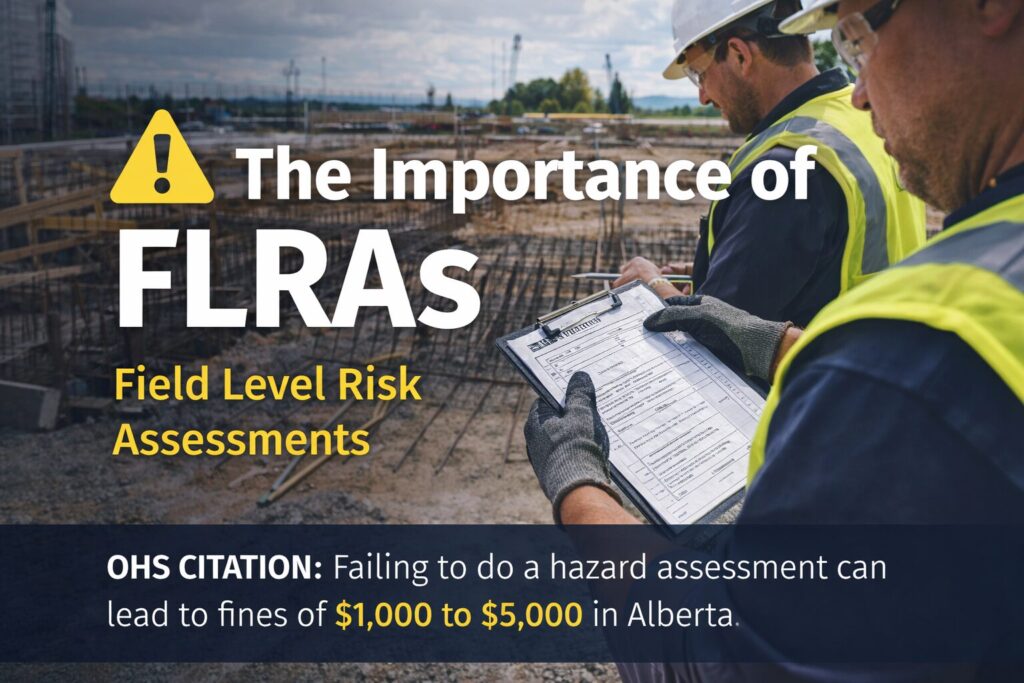
Alberta OHS enforcement regularly highlights documentation gaps, including missing or inadequate hazard assessments, as contributing factors in penalties and orders.
https://www.alberta.ca/ohs-administrative-penalties
For small companies, even relatively modest penalties or stop-work orders can disrupt operations significantly.
Clients and Prime Contractors Expect Safety Programs
Many small companies operate as subcontractors or service providers. Increasingly, clients and prime contractors require documented safety programs, even for small crews.
Common requirements include:
- A written safety program
- Field Level Risk Assessments (FLRAs)
- Training and orientation records
- Incident reporting processes
- Proof of ongoing safety management
Without these elements, small companies may lose opportunities—not because they do unsafe work, but because they cannot demonstrate how safety is managed.
A Safety Program Doesn’t Have to Be Complex
One of the biggest misconceptions is that a safety program must be large or complicated. For small companies, the most effective safety programs are simple, practical, and aligned with actual work activities.
An effective small-company safety program focuses on:
- Clear roles and responsibilities
- Practical hazard assessment processes
- Basic training and orientation tracking
- Simple incident reporting and follow-up
- Documentation that is easy to maintain
The goal is consistency, not volume.
How JADR Safety Consulting Supports Small Companies
At JADR Safety Consulting, we regularly work with small and growing Alberta-based companies that need safety programs tailored to their size and operations.
We help small companies by:
- Building right-sized safety programs that meet Alberta OHS requirements
- Simplifying hazard assessments and FLRA processes
- Implementing practical digital tools where appropriate
- Reducing administrative burden while maintaining compliance
- Supporting audits, inspections, and client prequalification
Our focus is on making safety manageable, not overwhelming—so owners and supervisors can focus on running the business while maintaining compliance.
Conclusion
A safety program is not reserved for large companies with dedicated safety departments. In Alberta, small companies face the same legal obligations and often greater operational risk when safety systems are informal or undocumented.
A practical, well-maintained safety program helps protect workers, supports compliance, and safeguards the business itself. When built to match the size and nature of the operation, a safety program becomes a tool—not a burden.
That’s where the right guidance makes the difference.
References
Alberta OHS Administrative Penalties
https://www.alberta.ca/ohs-administrative-penalties
Alberta Occupational Health and Safety Code – Hazard Assessment, Elimination and Control
https://search-ohs-laws.alberta.ca/legislation/occupational-health-and-safety-code/part-2-hazard-assessment-elimination-and-control
Book a consultation to review your current safety setup and identify clear, manageable next steps.
If your safety program is informal, undocumented, or pieced together as your company has grown, now is the time to tighten it up. JADR Safety Consulting helps small Alberta-based companies build practical, right-sized safety programs that meet OHS requirements without unnecessary complexity.